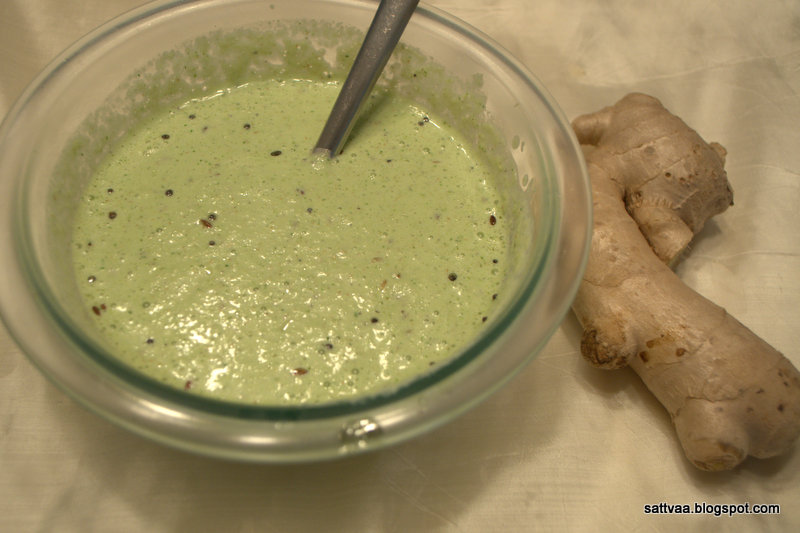
There are so many words or terms that have totally different meaning in different languages. Growing up, we called all yogurt based dishes generally as bajji - a short form for moasaru bajji (mosaru = yogurt) to differentiate them from other chutneys. So this genre included varieties such as tomato bajji, cucumber bajji, carrot bajji, onion bajji or sometimes even a 'bolu' (or bald referring to its lack of any vegetables) bajji. Although the term 'raita' was used, it was considered suitable for more formal usage :-). Then I started seeing conflict and confusion when I said 'bajji' to some of my friends and later to BH. I realized 'bajji' meant the deep fried snacks for most of them (which was pakoda or bondas for me). Have I confused you or thrown in enough different vocabulary at you by now? Believe me when I say that it was not my intention and I was actually trying to clear up the air a little bit :-)
So back to 'bajji', 'mosaru bajji' or 'raita', this is generally thinner than regular chutney or pachadis and work very well as a dip or come in handy to mix with rice. Some of them are preferred as the perfect companion for a pulav or fried rice. Most times, these dishes involve grinding coconut with a few spices and mixing it with the chopped raw vegetables along with yogurt. As there is minimal cooking involved(a break from the hot stove), and since it has yogurt in it, they are also prepared frequently during Summer. Infact, nammamma always made us eat the first morsel of rice with a bajji during Summer. She has a whole suite of bajjis, pachadis, gojjus and tambulis in her repertoire and they used fare very frequently in our meals.
Although this is almost always made with yogurt, nammamma sometimes replaced yogurt with tamarind for tanginess. It tastes as well and keeps a little longer than the one made with yogurt, so go ahead and replace yogurt with a small piece of tamarind and grind it along with the rest of the ingredients. But I strongly recommend against using tamarind juice or tamarind concentrate as it spoils the taste. For the below mentioned quantity, a small 1X1 inch piece of tamarind cooked along with spinach & green chilies will work.
I know I am far away from Summer right now but the Palak bajji is something we enjoy anytime of the year. Simple to prepare, delicious to eat, it has all the goodness of the greens accentuated with a little bit of green chilies. I got some baby spinach last week and made this. This goes very well with akki rotti or dosas or Raagi mudde too.
 What do you need to make Spinach bajji?
3 packed cups spinach leaves
1/2 cup grated coconut (fresh or frozen)
3-4 green chilies (adjust to taste)
1 Tsp salt
1/2 cup plain yogurt (preferably home made and a day old)
Seasoning:
1 Tsp oil
1/8 Tsp asafoetida powder
1/2 Tsp mustard
1/2 Tsp urad dal
1-2 pieces dry red chilies (optional)
 How do you make Spinach bajji?


So back to 'bajji', 'mosaru bajji' or 'raita', this is generally thinner than regular chutney or pachadis and work very well as a dip or come in handy to mix with rice. Some of them are preferred as the perfect companion for a pulav or fried rice. Most times, these dishes involve grinding coconut with a few spices and mixing it with the chopped raw vegetables along with yogurt. As there is minimal cooking involved(a break from the hot stove), and since it has yogurt in it, they are also prepared frequently during Summer. Infact, nammamma always made us eat the first morsel of rice with a bajji during Summer. She has a whole suite of bajjis, pachadis, gojjus and tambulis in her repertoire and they used fare very frequently in our meals.
Although this is almost always made with yogurt, nammamma sometimes replaced yogurt with tamarind for tanginess. It tastes as well and keeps a little longer than the one made with yogurt, so go ahead and replace yogurt with a small piece of tamarind and grind it along with the rest of the ingredients. But I strongly recommend against using tamarind juice or tamarind concentrate as it spoils the taste. For the below mentioned quantity, a small 1X1 inch piece of tamarind cooked along with spinach & green chilies will work.
I know I am far away from Summer right now but the Palak bajji is something we enjoy anytime of the year. Simple to prepare, delicious to eat, it has all the goodness of the greens accentuated with a little bit of green chilies. I got some baby spinach last week and made this. This goes very well with akki rotti or dosas or Raagi mudde too.

3 packed cups spinach leaves
1/2 cup grated coconut (fresh or frozen)
3-4 green chilies (adjust to taste)
1 Tsp salt
1/2 cup plain yogurt (preferably home made and a day old)
Seasoning:
1 Tsp oil
1/8 Tsp asafoetida powder
1/2 Tsp mustard
1/2 Tsp urad dal
1-2 pieces dry red chilies (optional)

- Heat a wide pan on medium heat, add spinach leaves and broken green chilies and saute for 30 seconds.
- Cover & cook for 2-3 minutes until Spinach leaves are soft and cooked well. Switch off.

- When completely cool, grind the cooked spinach, green chilies, salt & grated coconut to a smooth paste (Do not add water).
- Add yogurt and run the blender once to incorporate it well. Take it out to a bowl.
- Heat oil in a small pan, add asafoetida, mustard, urad dal and red chilies (if using), let mustard pop and urad dal turn pink. Pour the sizzling seasoning on top of the spinach bajji.
- Serve with rice or rotis.

Notes:
- I like this a little bit spicy so add extra green chilies but make sure you balance with yogurt to get a good hint of tartness.
- If you get big bunches of spinach, wash and pick only the leaves for this recipe.
- The consistency of the bajji is really a matter of personal preference, I make this bajji slightly thick so it coats the rice well when mixed with it, you can thin it down a little bit more with yogurt if you want to dip a bread or roti in it.