Showing posts with label boodu kumbala kaayi. Show all posts

Sunday, May 1, 2016

Boodukumbala kaayi (Ashgourd/winter melon) dose - changed perspective with a swapped in ingredient

Changing one's vision changes one's sight - Acharya Vivek

Random rambling alert on today's blog post:-). If you like to go to the recipe directly, please feel free to do so below. Let my ramblings not dilute the delicious dish I have today, I will say only this - this is a dose/dosa recipe that changes your perspective on dosa, the ingredients that are in the recipe are not what you would expect from a typical South Indian dose recipe, but then with so many changes around you, what really is typical anymore? Your last chance to scroll down to the recipe before the ramblings come down in an avalanche :-) and here is a teaser of the dish..
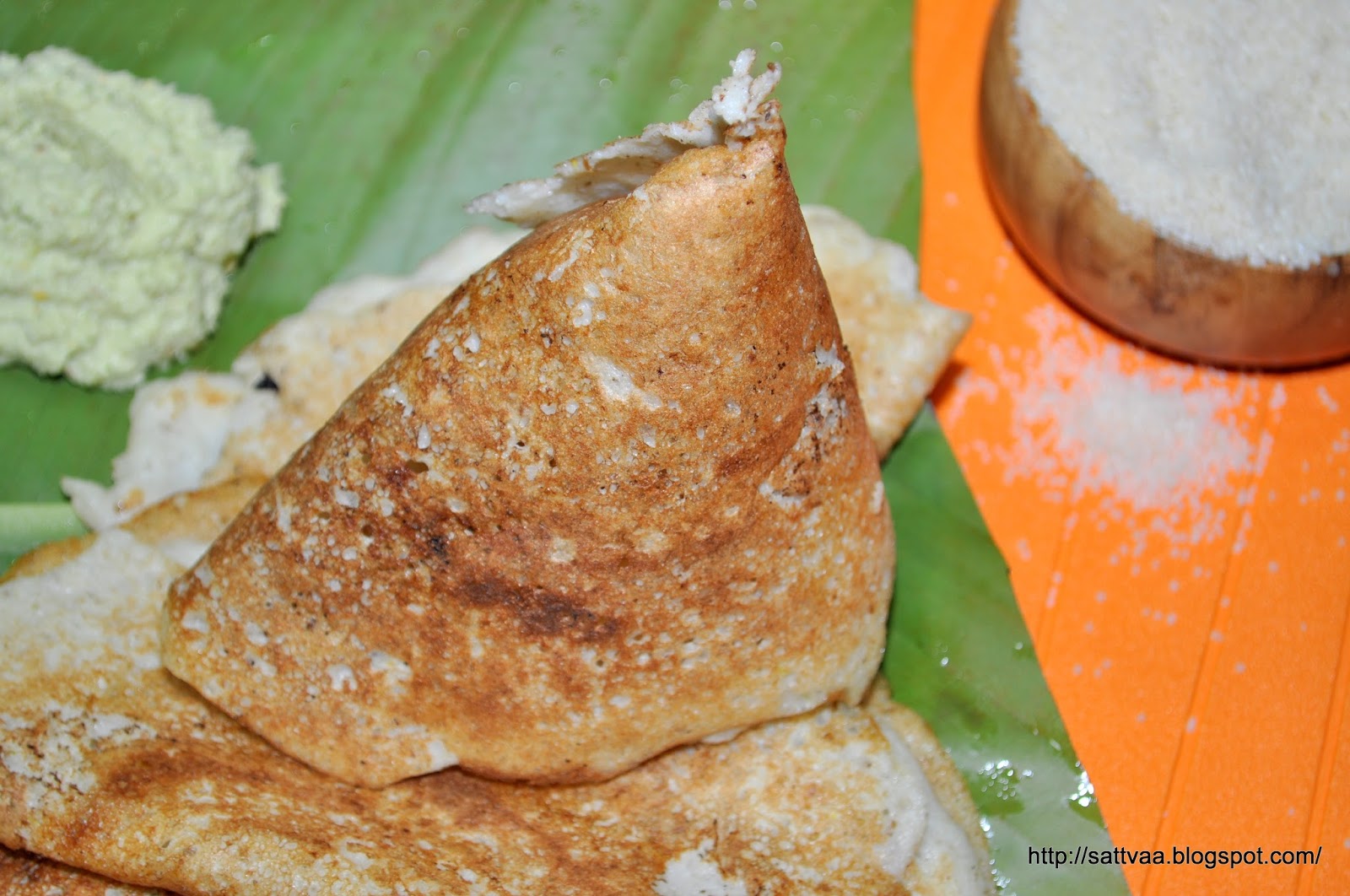
I wrote the quote at the head of the post today for a reason, that single sentence seemed to convey so much that I have been grappling to take in recently. Stereotypes broken, traditions created a-new.. isn't that part of life and while I am looking wide eyed around me, this quote finds its way into my inbox as if to summarize all that is happening.

I grew up in a small city, culturally vibrant, educational hub for some of the best education possible at the time, nonetheless small and contained. I also grew up in a family that was interested in music, literature and arts as well as scientific education. I am grateful for all of this and what it has made me in life today. But as life takes me to different places through different experiences, I learn every step of the way that my values are solidified with what I know thus far and the only way to broaden horizons is to be accepting of things that I may not know of and keep an open mind.
Music has been an integral part of life for me and I am no stranger to music concerts. But we went to a certain kind of music concerts always, mainly the classical kind. There was no dearth of concerts in Mysore and the music lovers in the city didn't need excuses to arrange concerts either. There were big scale concerts around Rama Navami and Dasara but rest of the year used to witness multiple music programs sponsored by various sabhas (organizations). I went to many, many concerts with family and enjoyed them all. Big brother studying in the Northern part of India introduced us to the joys of Hindustani classical, high school and college days saw me listen to many light classical ghazals, post marriage I enjoyed a lot more Lata, Rafi, Kishore Kumar style with BH and then as DD grew up into a music loving teenager, I was introduced to many of her favorites in Pop, jazz and all the new age genre. I love all kinds of music as long as it suits my mood at that time, but have really not attended many non classical concerts in my life. BH & I went to one last evening by a very popular musician, classically trained but into Indian movie music.
It was almost an eye opener, everything about the program was so different from my mental image of a music concert :-). The big stadium, the dancing crowd, loud speakers, flashing lights and the musicians engaging the audience all of it seemed to contrast and almost defy everything I held as part of my definition of a music concert where audience are engaged in a very subtle and gentle way, the most visible movement you see is a nod of the head or a pat on the knees as you try to keep with the percussion and the musicians themselves are more inward than outward. My initial reaction was one of total hesitation but as I got into the music, I found it totally enjoyable and in no time was enjoying the real music behind all the glitter. Great experience and only because I was ready to lift the veil off of my perceptions and change the vision!! Thanks to the local chapter of Sankara Eye foundation for organizing the program as they also fund raised for a good cause.
Today's recipe is one of changing the vision too. Millets started showing up as part of super healthy food on the blogosphere a few years back. There has been so much discussion about embracing healthy foods such Oats and Quinoa Versus the Desi grown millets. I accept that I am not an early adapter of changes, I let things settle down a little, feel comfortable before jumping on any band wagon. Though I kept hearing about the millets from various sources, I didn't spend a lot of energy researching them until much later. The only millet I was familiar with was Raagi or finger millet which I love and then jowar or sorghum. Raagi is a regular at home with the famed Raagi mudde and jowar has been silently sneaking into the kitchen for years since we love jolada rotti. Other than these two, I had pretty much stayed away from the millets, or rather was ignorant and uneducated about the existence of other millets.

For my background as a South Indian from Mysore, no meal is satisfying without the fluffy, white steamed rice. Most of us do not even consider brown rice as edible, it is almost snobbish the way people like me turn their noses to anything but the light, pearly white, super fluffy sona masoori rice :-). If you were to feed me a sticky jasmine rice, you would have to be a very patient, gently coaxing mentor :-), otherwise chances of success would be highly diminished. As we grew up, and also due to the lack of easy accessibility to rice made me add lot of wheat (another grain I was familiar with) and then slowly steer towards the easily reachable oats, quinoa and barley. Over the years, I have experimented with these different, possible supplements for my white rice. I still love my white rice but have successfully incorporated other grains and seeds in to the daily routine. And yes, brown rice makes its way into our kitchen too.

When I first heard of millets, I had no clue what they were. Nammamma never made anything like this, nor did amma. A year or so back, on a trip to my local grocery story, I found an entire shelf of packets that had different looking ingredients. Out of curiosity, I picked up each one of them and read the labels and then one of them caught my attention. The label said kodo millet and had the name in multiple Indian languages and the Kannada name was 'Harka'. This took me to a favorite novel of mine I have read and re-read many times by a famed Kannada author called S.L.Byrappa and there is a reference of Harka in that book as a rice substitute but the part I remembered was how people in plague ridden parts of the state had no access to rice for many months and had to survive on lesser desired things such as Harka which caused familial fights. While reading the book, I had never bothered to find out what harka was but here it was glaring in my face after all these years in my adopted country.

I brought small packets of every single variety of millet home that day and tried to cook with it. More than cooking, I was somehow trying to relate to and connect with all those ancestors that had lived the nightmare of the plague in those times. Millets are actually seeds very much like Quinoa which is the modern day super food and have higher fiber content than rice and better nutrition than polished rice too. I have been experimenting with these millets for almost 2 years now but haven't really written a lot about them. They are great rice supplements if you are looking for one and you can have them with any side dish just like rice. Depending on the variety, you may find and need to adjust how you cook or use them as some of them are bigger in size than others and may take longer to cook.
Initially I started adding them to my dose and idli batter while still keeping a major portion of rice. But once we got over the initial hesitation, I extended the proportion of millets and now have recipes which do not use rice at all. I am not saying rice is bad, my family has consumed rice all their lives and lived a pretty healthy life but as times change and if you are actively looking for other ingredients, millets are ready to take that spot without hesitation. Of the varieties I have used, 2 of my favorites are the foxtail millet (navane in kannada) and the little millet (Saama in Kannada). I find kodo millet to be dry and also the packages that I got had a lot of dirt that had to be picked. I don't get barnyard millet all the time here so no specific bias on that one.

Foxtail millet is good if you are making rice varieties (Ex: tamarind rice, chitranna etc) as it holds shape and can be cooked fluffy. Little millet is perfect for batters as it soaks and grinds easily. It is also great in and recipes like pongal, BBB etc since it tends to cook to a mushy consistency. Unlike quinoa, the millets do not have a smell or taste of their own thus making them invisible super ninjas as you replace them with rice in any recipe. Today's recipe is a coastal Karnataka favorite made with rice and ashgourd, I replaced the rice with little millet. Ashgourd is summer vegetable, when the mercury hits high and you are craving for something watery and cool, this is a go to vegetable. This dose is delicious whether you make it right out of the blender or let it sit for a few hours. All I had to do was change my vision to find better sight :-), go ahead and give it a try. If you are hesitant to try millets, make this dose with regular rice. Either way it is a keeper recipe!!

If this interests you to try other millet recipes, let me know with a comment on the blog post, I will get to post them sooner than following my lethargic pace :-)
What do you need? 
2-2.5 cups grated ashgourd
2 cups millet
1 Tsp fenugreek seeds
1 Tbsp urad dal (you can skip this if you like)
1 Tbsp poha or avalakki (thick variety)
1 Tsp cumin seeds
4-5 green chilies
1 Tsp salt (adjust to taste)
couple Tsp oil to roast dose
How do you make? 

  • Wash, pick any dirt from the millet and soak it in water along with fenugreek, urad dal and poha for 4-6 hours. Do it overnight if you have time or if you are using the thicker millets like foxtail millet. 
  • Wash, peel the outer skin and grate the ashgourd. Collect all the water it releases while grating and reserve for later use. 
  • Drain the water you have used for soaking and add the ingredients to a blender along with cumin and green chilies. 
  • Add all the grated ash gourd reserving about 2 Tbsp for later use to the blender and blend into a smooth paste. 
  • The water from the grated ashgourd can be added while grinding to get the required consistency, use it a little at a time to avoid making a very watery mixture. 
  • Once the ingredients have turned into a smooth paste of pouring consistency, take it out into a bowl and add the remaining grated ashgourd. 
  • Add salt to the batter if you are making dose right away or wait until you are ready to make them. 
  • Heat your dosa pan or griddle on medium heat, and once the pan is hot, take a ladle full of the batter and spread it in a circular motion. 
  • This can be made as thin or as thick as you choose. 
  • Add a few drops of oil around the edge of the dose, and let it cook covered on one side for a minute on medium heat. 
  • When the underside is golden, gently nudge the dose from the pan and flip it over. 
  • Cook on the other side for 30secs and take it out onto a plate. 
  • Repeat for the remaining batter or as many doses as you need.
  • Serve hot with ghee and chutney of choice. 
Notes: 
  • I used sawa/little millet this time but have made it with foxtail also. You can use either of these or other millets such as kodo, barnyard or little millet. Soaking millet makes it soft for grinding and makes the dose soft too. 
  • If you like thinly spread dosas, grate a small piece of the gourd in the small hole of the grater. The rest of the gourd that goes into the blender can be done on the big holes. This makes it easier to spread. 
  • The dosas get a nice golden color with the fenugreek so do not skip that. 
  • Urad dal is optional in this recipe and I don't add it sometimes. 
  • You can make this dose with the watermelon rind instead of the ashgourd. 
  • If you like crispy dose, don't cover it while cooking and cook on one side only. 
  • I add green chilies and cumin for flavor as both millet and ashgourd are sort of bland, you can omit these ingredients and eat it with a side dish if you choose. 

Saturday, February 18, 2012

Boodu kumbalakaayi (Ash gourd)Majjige Huli

What is one dish you will always find in all Kannadiga festivals and functions? yep Majjige Huli. It has its coordinates well defined in a festival platter and takes the center portion of the top half of the banana leaf in a traditional meal. Majjige ~ buttermilk, Huli ~ sour, although huli also means sambar in kannada I like to go with the meaning sour on this one because the main ingredient for majjige huli is sour curds/yogurt. This goes by various names such as mor kuzambu, majjiga pulusu, dahi kadhi etc along with regional variations to the basic recipe. This is made with sour yogurt/curds and can be made with different vegetables like ash gourd/winter melon, okra/bendekaayi/bendakaya, bottle gourd, chayote squash, palak greens.. you get the point. Nammamma never mixed the vegetables and used only one at a time. Amma makes multi veggie majjiga pulusu which is delicious too, this however uses different ingredients from what I am going to show today, I will post majjiga pulusu on another day.

Though majjige huli is made from a variety of vegetables, boodu kumbala kaayi or ash gourd majjige huli is a favorite, the combination of this vegetable in the tangy gravy is a match made in heaven and easily takes the crown away from the other versions. The porous structure of the vegetable helps soak up the gravy well and you can taste it with every bite. 

One of my uncles lived in North India and every time during their annual visit, we used to have this majjige huli on the menu as it was my aunt's favorite. She preferred my dad's preparation of this dish and would work through nammamma to let know of her liking for a thicker majjige huli as she wouldn't dare tell that directly to my father (as he was her husband's elder brother) :-)). The thickness of the gravy depends on the amount of chana dal you use as it tends to add bulk to the gravy on boiling and cooling. I like a creamy, pouring consistency which slowly drips onto your plate which can then be mixed with rice or dunked in by rotis. 
What do you need to make Majjige huli? 
1.5 cups sour yogurt/curds, 2 days old tastes good :-), use sour cream as a poor replacement 
Ash gourd - peeled, de-seeded and cut into bite size pieces about 2 cups
1/2 Tsp turmeric
1 Tblsp salt

Ingredients for masala:
1.5 Tblsp chanadal/kadle bele soaked in water for an hour or till it softens & swells up
1 Tblsp grated coconut - fresh or frozen
4-5 green chilies, adjust to taste, you will need more chilies if your yogurt is sour
1 inch piece of fresh ginger root
1 Tsp cumin seeds
A handful of cilantro/coriander leaves
Vaggarane/Seasoning:
1 Tsp cooking oil
1 Tsp mustard seeds
1 Tsp cumin seeds
4-5 curry leaves
1 red chili broken into 2 pieces
1/2 Tsp asafoetida
How do you make majjige huli?
  • Boil the ash gourd pieces in water, turmeric and salt till the pieces are soft to touch. 
  • Prepare masala by grinding all ingredients under masala with 1/2 cup of water.
  • Pour the masala into the pan with ash gourd, let it come to a gentle boil.
  • Whisk the curds till smooth and add it to the gravy and let it boil once before switching it off. 
  • Prepare vaggarane by heating oil, add mustard, cumin, asafoetida, curry leaves and red chilies and wait for mustard & cumin to splutter.
  • Pour the sizzling vaggarane on top of the majjige huli. 
  • Serve it hot or cold with rice or rotis. 
Tips: 
  • The amount of chana dal changes the consistency of the final product, I like this proportion in my gravy, adjust to suit your taste.
  • Majjige huli tastes best when the yogurt is sour, do not use fresh curds in this recipe.
  • Add the masala as soon the vegetable pieces are just cooked since ash gourd cooks further when you boil it with masala. The vegetable being high in water content tends to dissolve with prolonged boiling.
  • Do not boil for long after adding the whisked yogurt as it will curdle with heat and spoils the creamy texture of the majjige huli.
  • As I said before use sour cream in the dire situation you don't have curds but my tip is to beg and borrow some home made curds if you can - I know this sounds extreme but I am extremely partial to home made curds and the taste it imparts to the majjige huli.